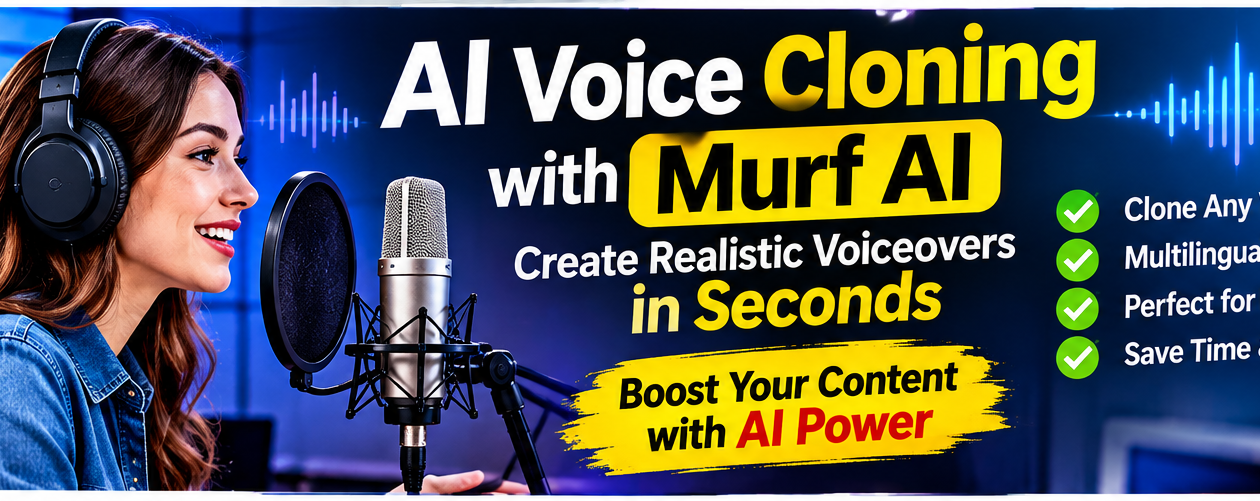
Audio plays an important role in modern digital content. From product demonstrations and online lessons to social media videos and business presentations, clear narration helps audiences understand information more easily. However, recording voiceovers for every project or update can take time. AI voice technology offers creators another way to produce narration efficiently.
Table of Contents
Understanding AI Voice Generation
AI voice generation converts written scripts into spoken audio. Creators can prepare their text, select a suitable voice, adjust the delivery, and generate narration for their projects.
Platforms such as Murf AI provide tools that help users create voiceovers for different types of content. These tools can be useful for businesses, educators, marketers, and video creators who need consistent narration.
The final result still depends on the quality of the script, voice selection, pronunciation, and editing. Reviewing the generated audio before publishing is always important.
Where Voice Technology Can Help
AI voice technology can support several content projects, including product demonstrations, training videos, educational lessons, presentations, podcasts, and promotional videos.
For example, a business may need to update a product video whenever its features change. Instead of recording the entire narration again, the team can revise the script and generate updated audio. This can make routine content updates more manageable.
Educators can also use AI narration to prepare learning materials, while marketers can create different versions of promotional content for various platforms.
Why Natural Delivery Matters
A good voiceover should be clear, understandable, and suitable for its audience. Speaking speed, pauses, emphasis, and tone all influence how listeners receive information.
Creators should write scripts in a natural conversational style and avoid unnecessarily complicated sentences. After generating audio, they should listen carefully and make adjustments wherever the delivery sounds unclear or unnatural.
A Practical Workflow for Creators
A simple workflow can help improve the final result. Start with an accurate script, divide longer content into smaller sections, and check names and technical terms. Next, select a voice that matches the project’s purpose and audience.
After generating the narration, review the complete audio. Correct pronunciation issues, adjust awkward sentences, and make sure the timing works with the visuals. If using a voice that resembles a real person, obtain the appropriate permission.
Conclusion
AI voice technology is changing how creators approach audio production. It offers a flexible way to prepare narration, update existing content, and support projects across different platforms.
However, technology works best when combined with careful writing and human review. By choosing suitable voices, preparing clear scripts, and checking the final audio, creators can produce more effective and engaging content.